Hiring and indirect rates move together more closely than most growing GovCon businesses expect. Hiring ahead of growth feels like the right strategic move, and often it is. But the same hire that positions a company to win more work can show up in next month’s rate report as a spike that alarms a controller before anyone has connected the two.
Why Hiring and Indirect Rates Move Together Before Revenue Catches Up
Direct costs drive every other indirect rate. When direct labor grows, fringe, overhead, and G&A rates tend to fall because the same indirect cost base is spread over more direct work. When direct labor shrinks relative to indirect costs, those rates climb. A new employee’s fringe costs start on day one: employer taxes, health insurance, retirement, regardless of whether that person is billing to a contract yet. If the hire is onboarding, training, or sitting on the bench waiting for a contract to start, their labor is not direct labor yet. It is overhead, classified as non-productive or idle labor, or it is G&A if the hire is in business development or administration. The new fringe and overhead cost arrives immediately. The direct labor that would normally offset it does not arrive until the person is actually billable.
Two Very Different Hiring Situations
Not every hire creates this gap the same way. Hiring against confirmed backlog, a signed contract with a defined start date, means the direct labor and the associated revenue arrive close to the same time as the cost. The rate impact is minimal because the base grows along with the pool. Hiring ahead of backlog, anticipating work that has not been awarded yet, means the cost lands before the direct labor does. That is often the right call strategically, since the alternative is losing an award because the company could not staff it fast enough. It is also the situation most likely to produce a rate spike that looks alarming until you understand it. This is one reason small business government contractors in growth mode see more rate volatility than larger, steadier competitors.
Budget for the Gap Instead of Being Surprised by It
A budget built entirely bottom-up, from current headcount and known costs, will not anticipate this gap. A budget that incorporates the top-down view, confirmed backlog, weighted pending proposals, and planned hires ahead of anticipated work gives a business a realistic picture of how many months of elevated indirect rates to expect before new direct labor catches up. Knowing that in advance changes the conversation from “why did our overhead spike” to “this is the gap we planned for, and here is when it closes.”
Model the Hire Before You Make the Offer
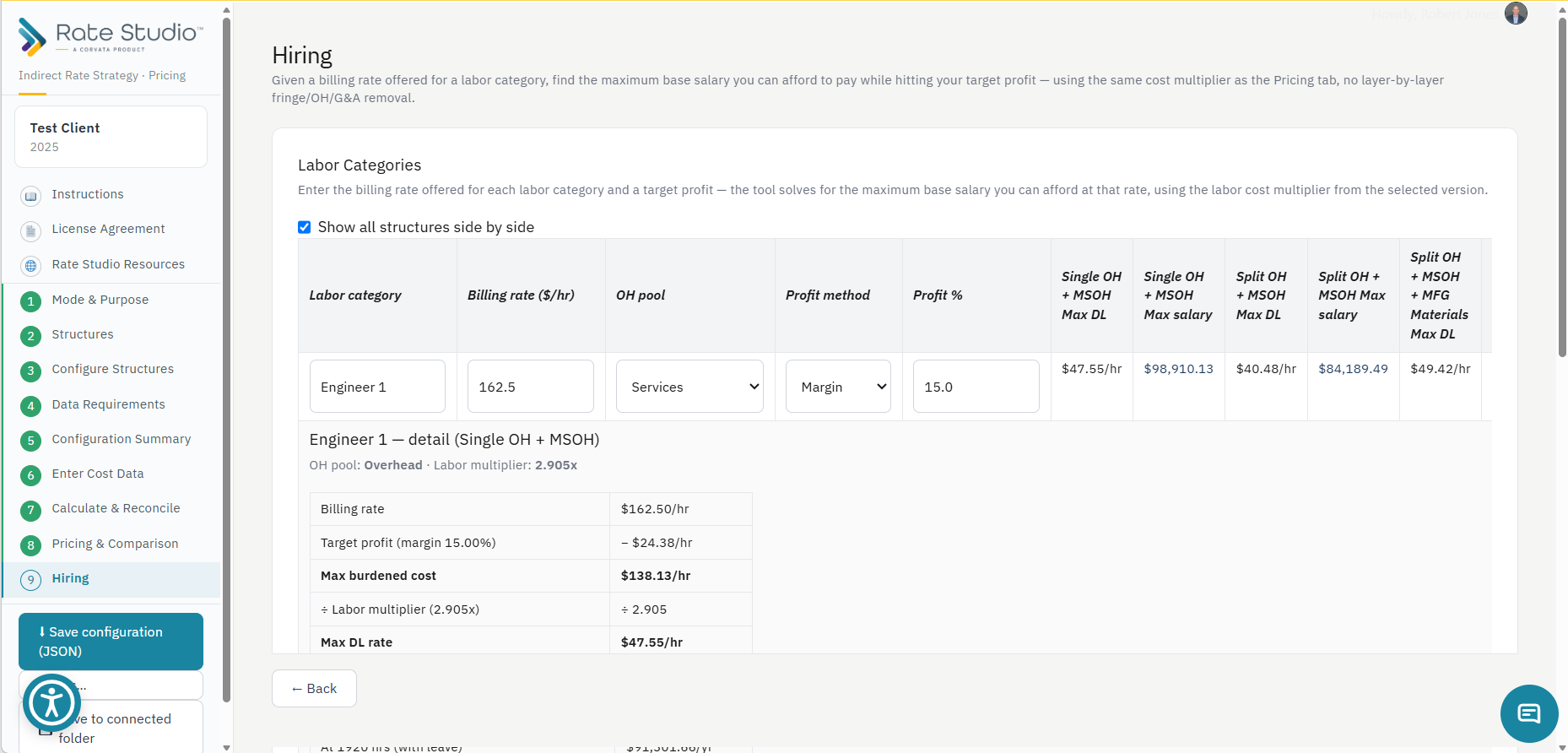
Understanding how hiring and indirect rates interact before you extend an offer is the whole point of testing it in advance, rather than discovering the impact after the next month’s actuals arrive – the same actuals an auditor evaluates under FAR 42.7 when reviewing your indirect cost rates. Rate Studio’s Hiring tab is built for exactly this: model the effect of adding one employee or a wave of them on your fringe, overhead, and G&A rates, using your actual cost structure, so you know what the next few months of rates will look like and why, before you commit to the hire.
Rate Studio is a purpose-built tool for modeling and managing indirect rates.
This post is part of the Beyond the Single Rate series. To learn more, schedule a conversation.