
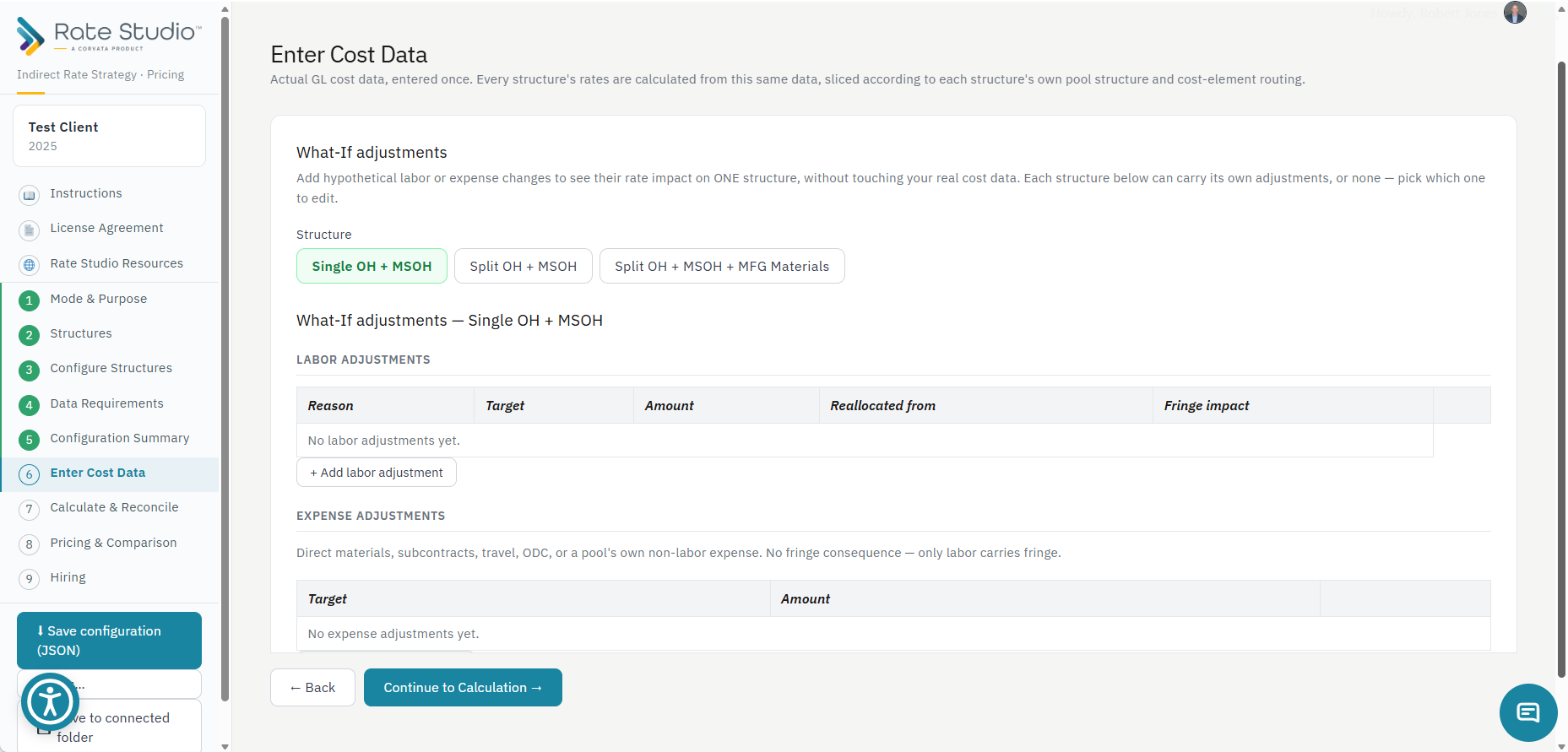
Modeling a rate change before committing to it is the difference between managing indirect rates and reacting to them. In most GovCon finance teams’ quarterly reviews, someone proposes moving dollars around to fix a rate that has drifted higher than expected. Reduce overhead a little to offset the fringe increase. Shift some supplies from one pool to another. The instinct behind it is usually sound. The habit of making that change and finding out what happened next quarter is not.
Why a Change Never Stays in One Pool
Indirect rates build from each other. Fringe applies to overhead’s base; overhead and fringe both feed into G&A’s base, and a pool like MSOH sits in between, layering its own effect on top before G&A applies – a structure FAR 42.7 assumes contractors understand well enough to propose and bill accurately. Move dollars into or out of any single pool, and the rates downstream move too, whether or not that was the intent. A manager focused on bringing overhead down rarely stops to calculate what that same move does to G&A once overhead’s applied cost flows into G&A’s base. That is not a failure of attention. It is simply hard to trace a cascade by hand across several pools at once, especially under deadline pressure.
Two Kinds of Adjustments, Two Different Risk Levels
Budget adjustments generally fall into two categories, and each carries different risk.
Intra-pool adjustments move dollars within a single pool without changing that pool’s total dollars or resulting rate. Reducing a supplies line to offset an unexpected equipment expense inside overhead is a common example. Because the pool total stays constant, the downstream effect on G&A stays constant too. This is the lower-risk move.
Inter-pool adjustments shift dollars between pools, for example, reducing overhead expenses to offset an increase in fringe. The goal is usually to keep the overall billing multiplier roughly the same even though fringe is now higher and overhead is now lower. This can work, but it changes what each individual pool reports and the base each downstream pool calculates against. An inter-pool adjustment that looks neutral at the multiplier level can still shift the individual rate a specific contract is billed at, depending on which pools that contract’s costs actually run through.
The Same Discipline Applies to Bigger Changes
This reasoning is not limited to a routine quarterly adjustment. Every structural change covered earlier in this series – splitting fringe, splitting overhead, adding an MSOH pool – is a larger version of the same problem: a change to one part of the structure moves everything downstream of it. The scale is different. The underlying discipline is identical. Before committing to any change, intra-pool, inter-pool, or a full pool split, the responsible move is to see the complete resulting rate structure first, not just the piece you intended to change. That is what modeling a rate change actually means in practice.
Why Modeling a Rate Change Beats Guessing
Modeling a rate change against real historical data, rather than making the change and watching the next few months of actuals tell you what happened, is the discipline behind the DCAA’s own guidance on monitoring and managing indirect rates, and it is the difference between managing indirect rates and reacting to them. That is the exact use case Rate Studio’s What-If mode is built for. Adjust a pool, shift dollars between pools, or model a full structural change against your actual numbers, and see every downstream rate move in response before anything touches your live budget or your chart of accounts.
Rate Studio is a purpose-built tool to model and manage indirect rates.
This post is part of the Beyond the Single Rate series. To learn more, schedule a conversation.