
ENTERPRISE DECISION FLOW
Structure and discipline mean nothing if judgment doesn’t move.
If Structure defines where value lives and Discipline stabilizes it, Decision Flow is what powers it.
Structure defines where value lives. Discipline keeps that value stable. But neither one matters if decisions themselves don’t move cleanly through the organization, from the moment a problem is raised to the moment it’s actually resolved. Decision Architecture is Corvata’s umbrella for everything that governs that movement: how it should work, how well it’s actually working, and where it tends to break down.
The Decision Discipline Framework™
Clarity. Ownership. Movement.
Defines the six-stage flow, Trigger, Frame, Sufficiency, Commitment, Communicate, Execute & Monitor, that governs how a decision should move from being raised to being resolved.
Most organizations don’t fail because leaders are incapable of making decisions. They fail because decisions move through the enterprise inconsistently. Some issues never get formally called as decisions at all. Others get discussed repeatedly without anyone committing. Some get made but never written down. Over time, this creates friction that leadership often mislabels as a communication problem or an accountability problem, when it’s really a decision system problem.
The Decision Discipline Framework is Corvata’s operating model for how decisions should move through an organization, from the moment an issue surfaces to the point where the outcome gets reviewed.
- Trigger — an issue, risk, or opportunity surfaces and gets explicitly named as something that requires a decision, not just discussed as a frustration
- Frame — the decision gets defined clearly: what’s actually being decided, who owns it, and what the constraints are
- Sufficiency — enough information gets gathered to decide responsibly, without letting analysis expand past the point of usefulness
- Commitment — the decision gets formally made, by someone with the authority to make it, not just implied through consensus
- Communicate — the decision and its reasoning get translated into shared understanding across everyone it affects
- Execute & Monitor — the decision gets implemented, tracked, and reviewed to confirm it’s producing the intended result
Every enterprise runs on decisions like these, made every day, across every domain. When this flow breaks down, even well-designed structures and well-written policies sit inert. Judgment doesn’t move, and the organization becomes more dependent on whoever’s willing to push things forward personally, usually the founder.
The Decision Maturity Index measures how well this framework is actually functioning inside your organization today.
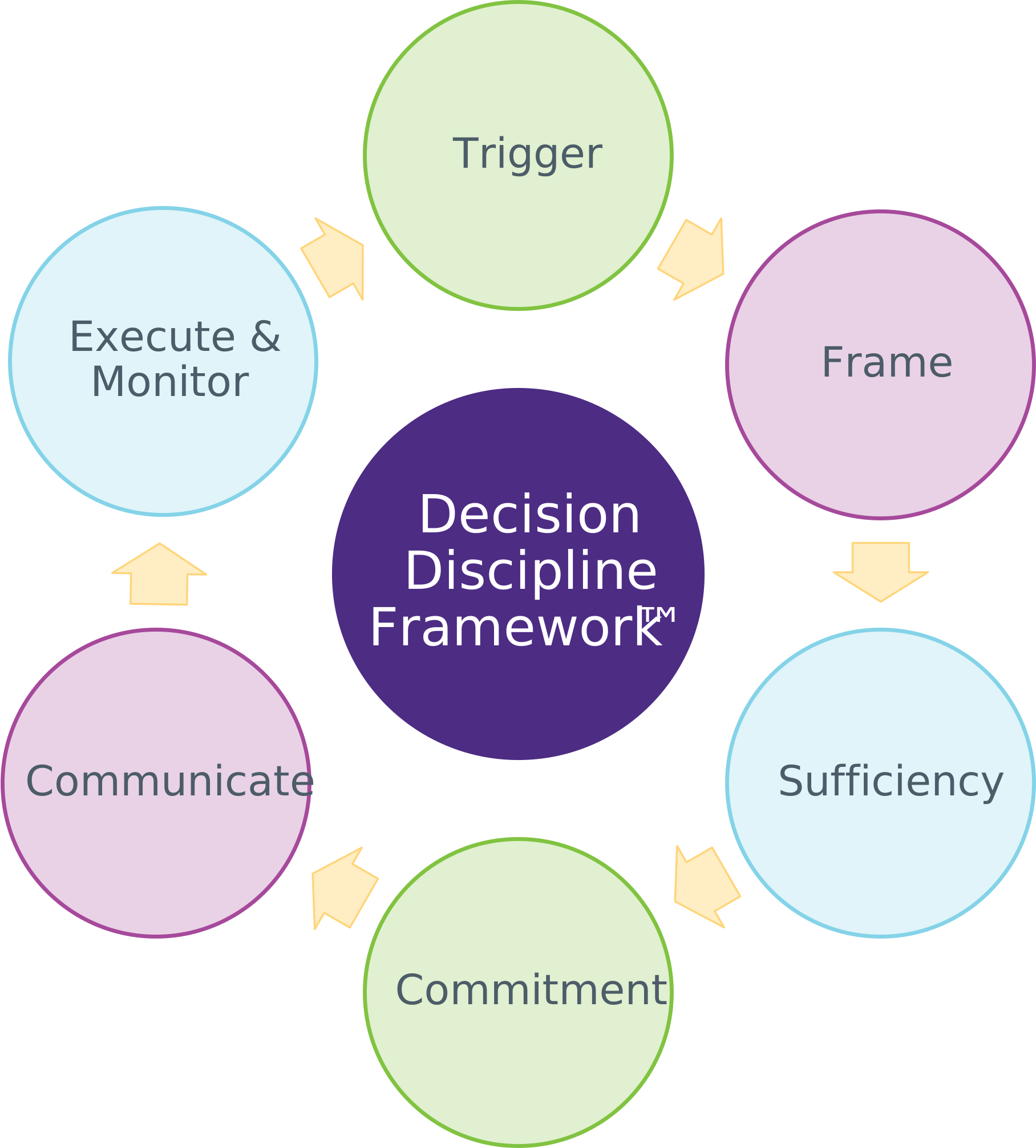
Most organizations do not fail because leaders are incapable of making decisions. They fail because decisions move through the enterprise inconsistently.
The Decision Maturity Index™
Understanding the strength of a decision system.
Evaluates how effectively that flow is actually functioning in practice, measured across six dimensions and four maturity levels, from Reactive to Institutionalized.
The Decision Discipline Framework describes how decisions should move through an enterprise. The Decision Maturity Index evaluates how effectively that movement is actually happening in practice.
Most leadership teams are capable and experienced. Yet many organizations still experience the same recurring friction: decisions get revisited long after they seemed settled, initiatives stall after apparent agreement, and leaders become the bottleneck for issues that should be handled somewhere else in the organization. That pattern isn’t a sign of weak leadership. It’s a sign that decision capability lives inside individual people rather than inside the organization itself.
The six dimensions.
- Decision Clarity — how well the organization understands what’s being decided, who owns it, and how authority is distributed
- Decision Velocity — how efficiently the organization moves from recognizing an issue to committing to a course of action
- Decision Documentation — whether important decisions leave behind a record of what was decided, why, and by whom
- Decision Communication — whether decisions are understood across the organization, not just distributed to it
- Execution Consistency — whether decisions reliably translate into action, or stall after the meeting ends
- Outcome Review — whether the organization reflects on results and learns from them, rather than repeating the same patterns
The five maturity levels. Organizations typically progress through five stages as their decision systems mature: Reactive, where decisions depend almost entirely on individual leaders; Emerging, where structure begins to appear but unevenly; Structured, where consistent practices exist across the enterprise; Managed and Institutionalized, where decision discipline is embedded in how the organization operates, regardless of who’s in the room.
Decision maturity rarely develops evenly. A company might show real discipline in finance while operations still runs on instinct and informal conversation. Understanding where those gaps sit is one of the clearest ways to see how close an enterprise actually is to operating independent of its founder, which is the foundation the Corvata Enterprise Readiness Assessment builds on directly.
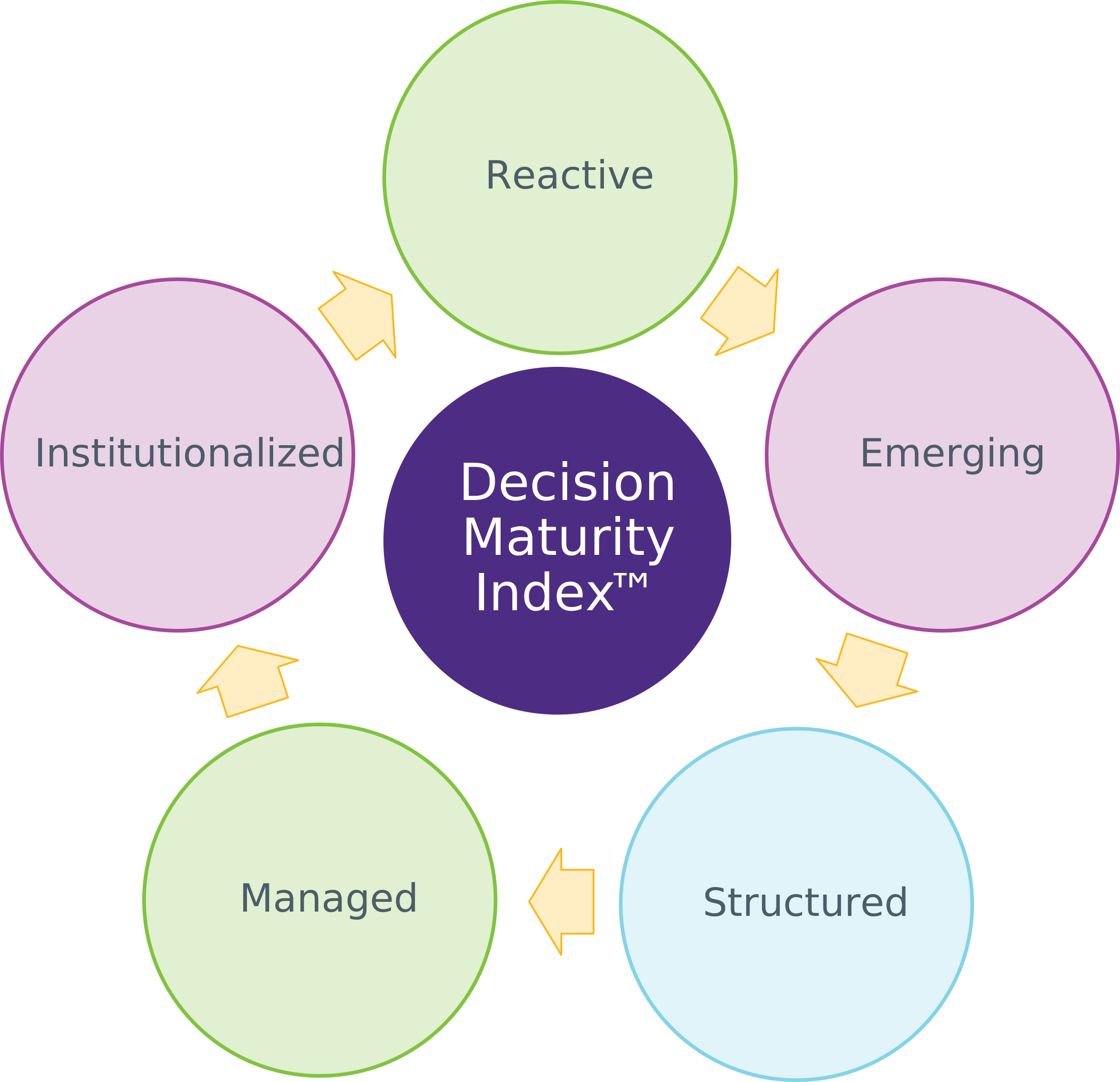
Where the Decision Discipline Framework describes how decisions should move, the Decision Maturity Index evaluates how effectively that movement occurs in practice.
Decision Failure Modes™
Seven ways a decision system quietly breaks down.
Catalogs the seven most common patterns through which decision discipline breaks down, from decisions that never get formally called to decisions that get quietly undone.
Organizations often blame operational problems on leadership disagreements, communication breakdowns, or execution failures. Those symptoms are real, but they frequently trace back to something deeper: the organization’s decision system itself breaking down. When decisions don’t move through the enterprise with clarity and discipline, the same friction shows up again and again. Issues stay unresolved. Initiatives stall. Teams lose track of direction. Leadership finds itself revisiting the same discussion for the third or fourth time.
- Decision Avoidance — leadership never formally acknowledges that a decision is actually required, so the issue gets discussed repeatedly without anyone claiming ownership of it.
- Decision Delay — the decision is acknowledged, but commitment keeps getting pushed back in the name of more information, more stakeholders, or better timing.
- Over-Analysis — the organization keeps gathering information long after enough exists to decide responsibly, mistaking more data for less risk.
- Undocumented Commitments — a decision gets made but never written down, so the organization loses a shared understanding of what was actually decided and why.
- Opaque Decisions — people know a decision happened but don’t understand the reasoning behind it, so they comply without really aligning.
- Unexecuted Initiatives — the decision itself was sound, but it never gets translated into real operational action.
- Decision Reversal — a decision quietly gets undone through informal drift rather than through any real reconsideration.
None of these patterns are personality flaws. They’re what happens when an organization doesn’t have a reliable structure for how a decision should move from being raised to being fully carried through. The Decision Discipline Framework exists to give it one.
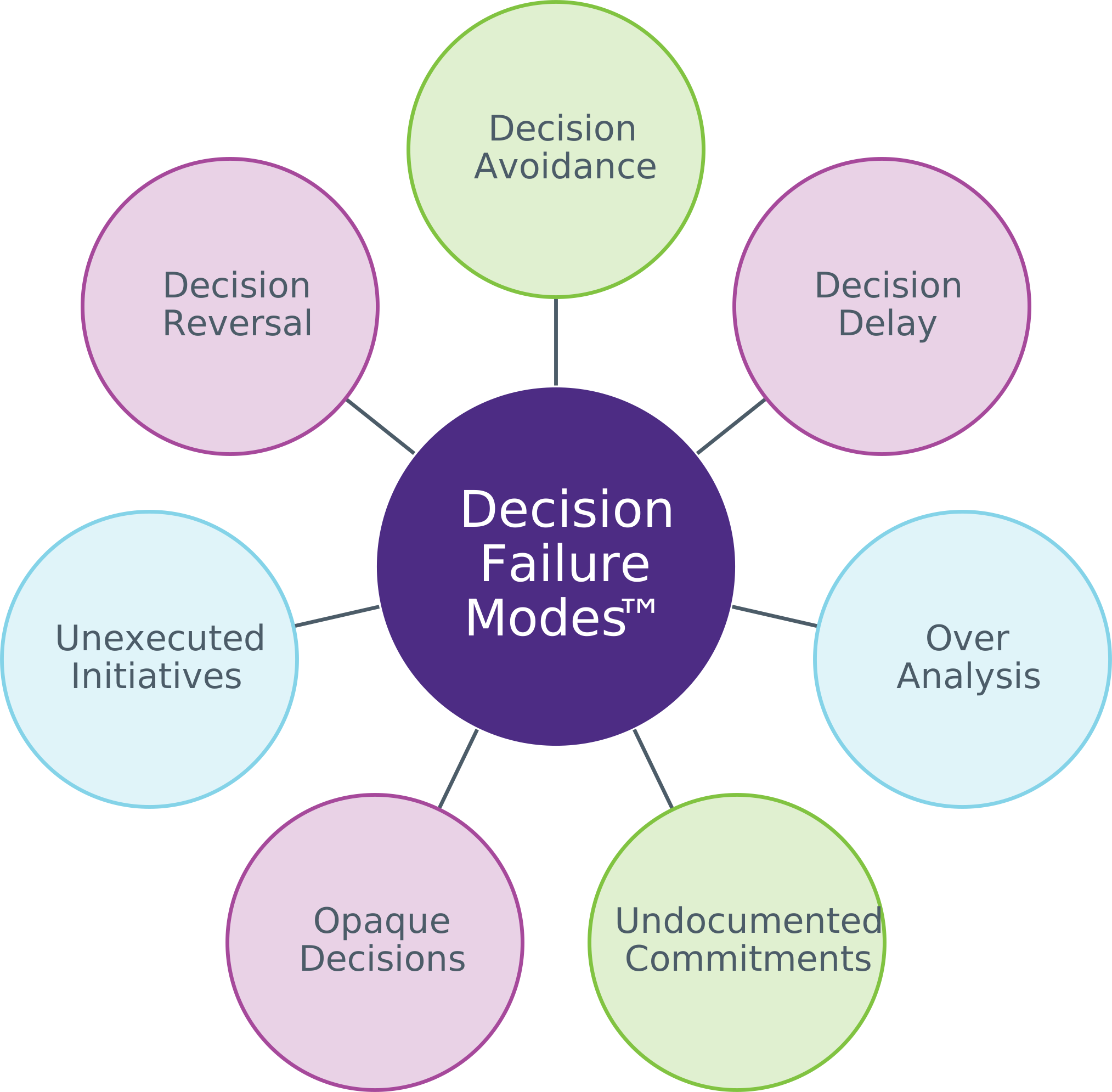
These breakdowns are rarely the result of incompetence. They are predictable patterns.
These three resources work together rather than separately. The Framework defines the standard. The Index measures how close an organization is to meeting it. The Failure Modes name what’s actually going wrong when it doesn’t. Together, they give Corvata, and its clients, a shared vocabulary for diagnosing exactly where judgment is breaking down and what to do about it.
Is your enterprise ready to stand on its own?
Every ownership and leadership transition journey starts with an honest look at how the enterprise actually operates. If you’re ready to have that conversation, we’re ready to have it with you.
Not ready to talk yet? Start with a five-minute look at where you stand.
The Corvata Enterprise Readiness Indicator (ERI) is an 18-question self-assessment designed to give business owners a fast, structured read on their organization’s institutional maturity — the degree to which the enterprise can perform, sustain value, and execute independently of any single person. Your results will identify which of four business archetypes best describes your organization today, and where the most likely opportunities for reinforcement lie. Delivered on-screen immediately upon completion.