
The Ten Enterprise Domains
Ten places value can quietly go missing.
A business can look profitable while several of these domains stay underdeveloped. Enterprise Structure asks a simple question of each one: where does value actually live here?
Every government contractor operates across the same basic set of functions, whether or not anyone has ever mapped them out deliberately: governance, people, operations, finance, technology, risk, compliance, contracts, capital strategy, and growth. These are the Ten Enterprise Domains, and together they hold the enterprise’s real value.
Most owners can describe how a few of these domains work in detail. Almost none can describe how all ten work together, because no one built them to be examined as a system. That’s not a failure of leadership. It’s simply what happens when a business grows through momentum rather than design.
The Domains
- Governance — how authority and oversight are structured
- People — how talent is developed, retained, and organized
- Operations — how work actually gets done day to day
- Finance — how the business tracks, reports, and protects its financial position
- Technology — how systems and tools support (or limit) the enterprise
- Risk — how exposure is identified and managed before it becomes a crisis
- Compliance — how the business meets the regulatory demands specific to government contracting
- Contracts — how agreements are structured, managed, and protected
- Capital Strategy — how the business funds growth and manages liquidity
- Growth — how the business pursues and absorbs expansion without losing control of itself
None of these domains function in isolation, and none of them mature simply because the business is profitable. A company can generate strong revenue while several domains remain underdeveloped, and that gap is invisible from the inside until someone outside the business – a buyer, an investor, a new leader – looks closely enough to find it.
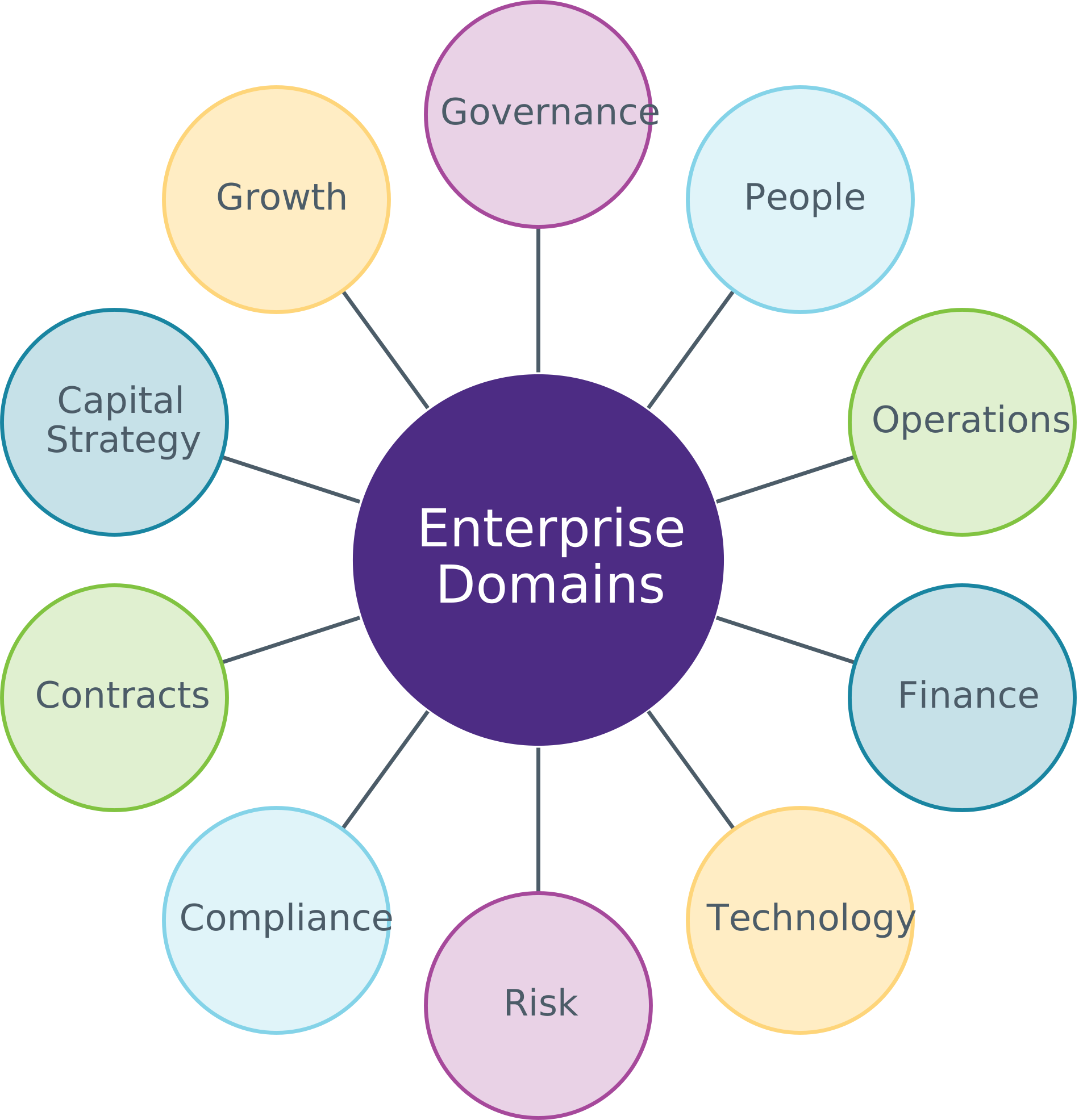
The Enterprise Domains describe where that gap can hide. The Enterprise Disciplines, covered next, describe what closes it.
Is your enterprise ready to stand on its own?
Every ownership and leadership transition journey starts with an honest look at how the enterprise actually operates. If you’re ready to have that conversation, we’re ready to have it with you.
Not ready to talk yet? Start with a five-minute look at where you stand.
The Corvata Enterprise Readiness Indicator (ERI) is an 18-question self-assessment designed to give business owners a fast, structured read on their organization’s institutional maturity — the degree to which the enterprise can perform, sustain value, and execute independently of any single person. Your results will identify which of four business archetypes best describes your organization today, and where the most likely opportunities for reinforcement lie. Delivered on-screen immediately upon completion.