
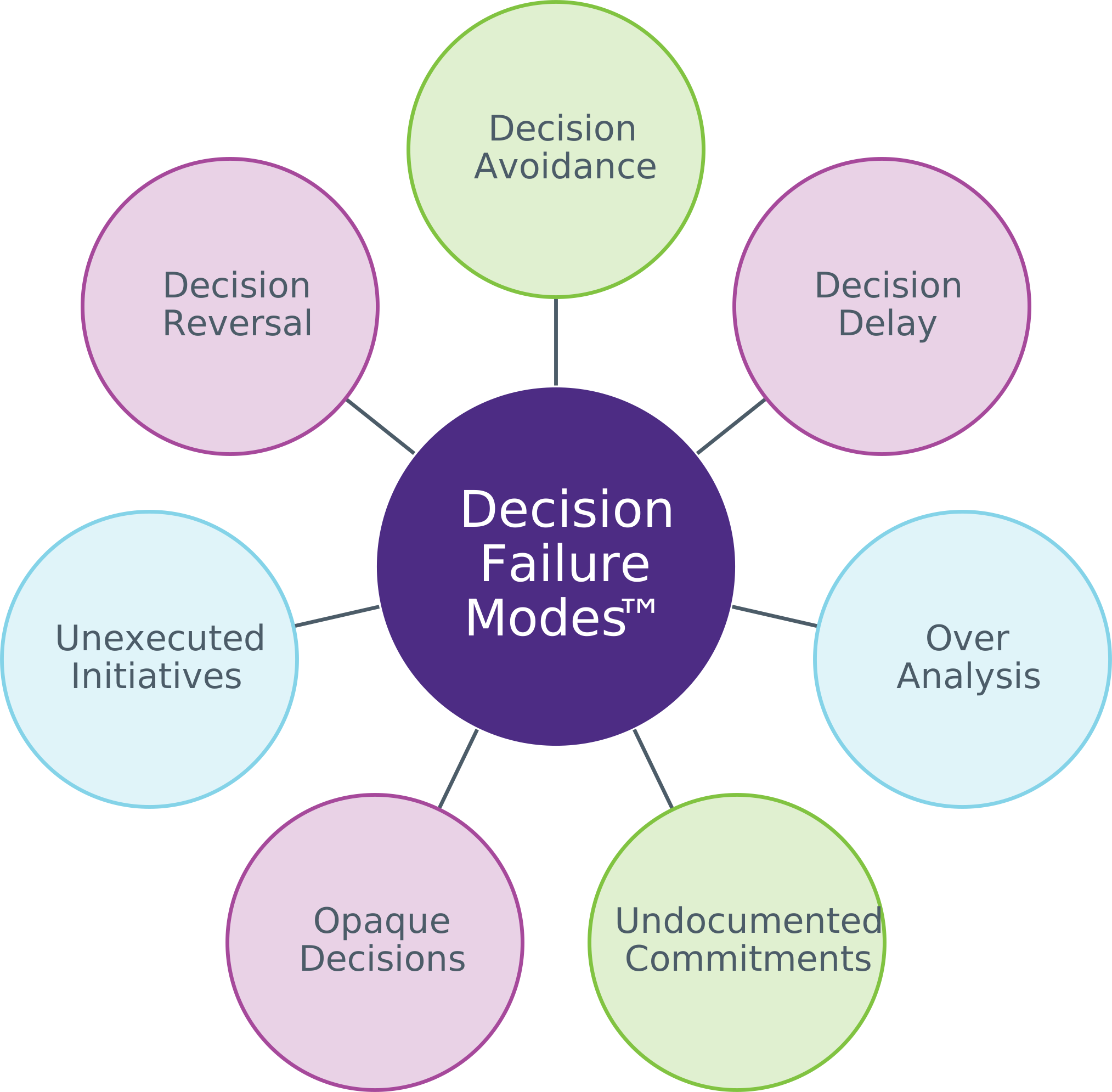
Where Enterprise Value Quietly Erodes
Organizations rarely fail because of intelligence.
They fail because decisions break down.
The seven Decision Failure Modes identify the most common structural breakdowns within growing and complex enterprises. These are not personality flaws. They are operating system weaknesses.
When decision flow fractures, value erodes — often invisibly at first.
This page answers a critical question:
Where is decision integrity breaking inside your enterprise?
1. Decision Avoidance
When Leadership Hesitates to Engage
Avoidance occurs when issues surface but no one formally owns the decision.
Symptoms include:
- Problems repeatedly resurfacing
- Issues discussed but never resolved
- Passive deferral to “later”
- Cultural discomfort with conflict
Avoided decisions compound risk over time.
Durable enterprises confront decisions early — before cost escalates.
2. Decision Delay
When Timing Becomes the Risk
Delay differs from avoidance.
The decision is acknowledged — but postponed beyond the appropriate window.
Common causes:
- Excessive stakeholder consultation
- Fear of imperfection
- Unclear authority thresholds
- Lack of defined escalation
Delay reduces agility and increases operational friction.
In dynamic environments, timing is part of the decision itself.
3. Over Analysis
When Information Gathering Becomes a Shield
Sufficiency requires judgment.
Over-analysis replaces judgment with data accumulation.
Indicators include:
- Endless modeling
- Expanding scope of research
- Continuous refinement without closure
- “One more scenario”
Analysis should inform decision-making — not replace it.
Mature enterprises gather enough information to act responsibly.
4. Undocumented Commitments
When Decisions Exist Only in Memory
Verbal decisions create ambiguity.
Without documentation:
- Ownership blurs
- Rationale disappears
- Due diligence weakens
- Institutional memory evaporates
Enterprises dependent on undocumented agreements struggle during leadership transition or transaction.
Buyers underwrite documented judgment.
Opaque Decisions
When Decisions Are Made — But Not Aligned
Communication failures fragment execution.
Common symptoms:
- Teams operating under different assumptions
- Informal interpretations of formal decisions
- Stakeholders unaware of changed direction
- Conflicting initiatives
Alignment is not automatic.
Disciplined enterprises ensure clarity reaches every impacted layer.
6. Unexecuted Initiatives
When Commitment Fails to Translate Into Action
A decision is only durable if it is implemented.
Breakdowns here include:
- Initiatives that stall
- Accountability diffusion
- Missed milestones
- No outcome tracking
Execution discipline separates strategic intent from operational reality.
Strong enterprises close the loop.
7. Decision Reversal
When Decisions Quietly Collapse
Reversal becomes destructive when:
- It occurs without explanation
- It undermines authority
- It creates cultural instability
- It erodes trust
Course correction is healthy.
Unstructured reversal destabilizes governance.
Mature enterprises revisit decisions through defined review mechanisms — not informal retreat.
Why Failure Modes Matter
These failure modes are rarely dramatic.
They manifest gradually as:
- Friction
- Confusion
- Authority tension
- Missed opportunities
- Cultural fatigue
Over time, they reduce:
- Predictability
- Transferability
- Valuation confidence
Decision failure compounds risk across every enterprise domain.
Finance suffers.
Governance weakens.
Operations drift.
Growth becomes volatile.
The erosion is systemic.
From Failure to Maturity
The purpose of identifying failure modes is not critique.
It is clarity.
Within the Enterprise Readiness Operating Model™, these failure patterns are evaluated through the Decision Maturity Index™.
The question is not whether failure occurs.
It is whether the enterprise has a structured mechanism to detect and correct it.
Where Does Decision Flow Break in Your Organization?
The Corvata Enterprise Readiness Assessment™ identifies decision failure patterns across all ten Enterprise Domains
and measures the maturity of your decision architecture.