
The Operating System of Judgment
Enterprise durability is not determined solely by structure or policy.
It is determined by how decisions move.
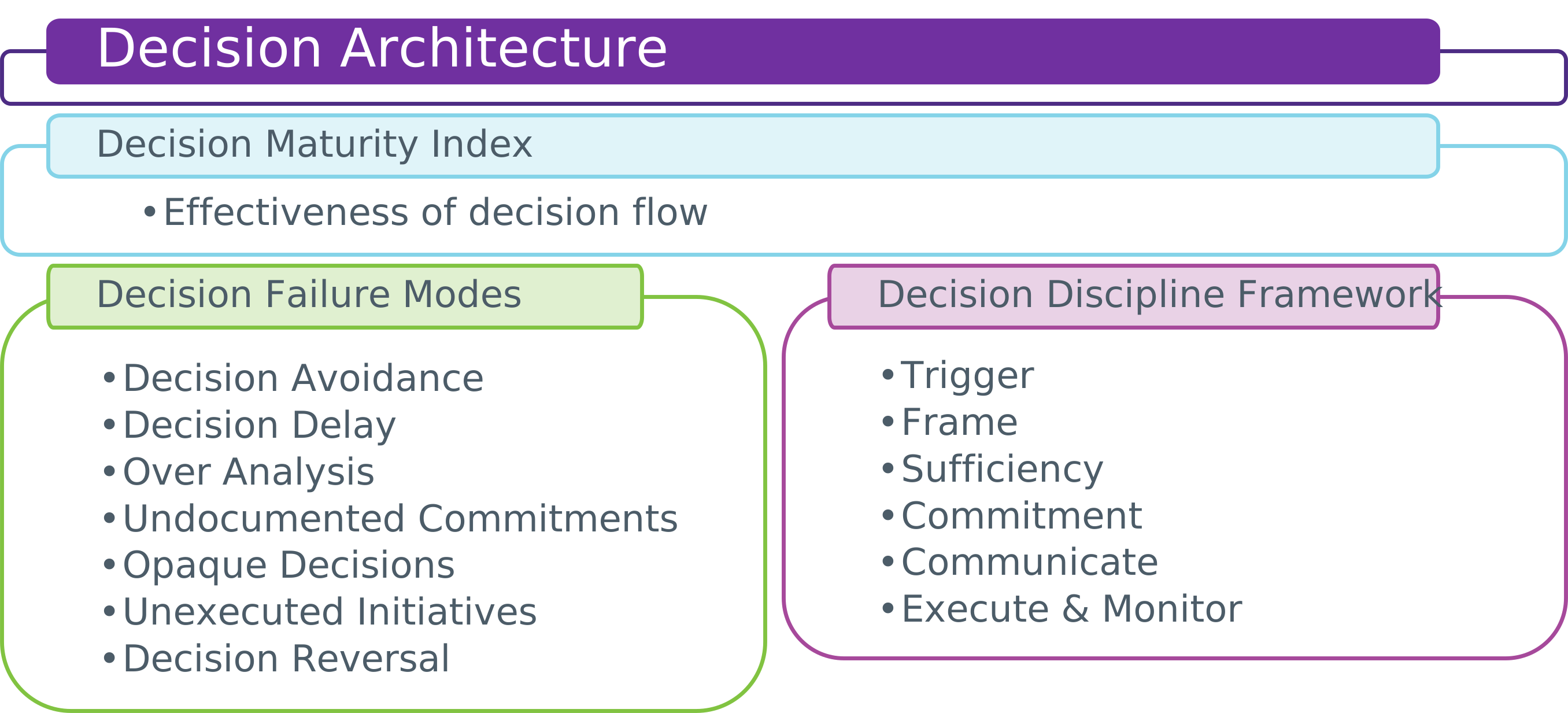
The Decision Architecture within the Enterprise Readiness Operating Model™ defines how judgment flows through the organization, where it breaks down, and how it is measured.
If Enterprise Structure defines where value lives, and Enterprise Discipline stabilizes maturity, Decision Architecture powers movement.
This section includes three integrated components:
- Decision Discipline Framework™ – How decisions should flow
- Decision Failure Modes™ – Where decisions break
- Decision Maturity Index™ – How decision integrity is measured
Together, they determine whether authority is institutionalized — or personality-dependent.
1. Decision Discipline Framework™
How Decisions Move
Defines the six-stage flow from trigger to execution and review.
Without structured flow, decisions stall, drift, or fragment.
2. The Decision Failure Modes™
Where Value Quietly Erodes
Identifies the recurring breakdown patterns that destabilize organizations.
Failure modes are not personality flaws.
They are structural weaknesses.
3. Decision Maturity Index™
Measuring Decision Integrity
Applies measurable dimensions across all 10 Enterprise Domains™ to evaluate judgment maturity.
This is where architecture becomes diagnostic.
Why Decision Architecture Matters
Buyers evaluate institutionalized judgment.
They assess whether:
- Decisions are documented
- Authority is distributed
- Execution is consistent
- Governance survives transition
Decision architecture is the clearest indicator of enterprise independence.
Institutionalized Judgment Can Be Measured
The Corvata Enterprise Readiness Assessment™ applies Decision Architecture™
across every domain to produce a clear durability profile.