
Measuring the Integrity of Judgment
Every enterprise makes decisions.
Few measure how well they make them.
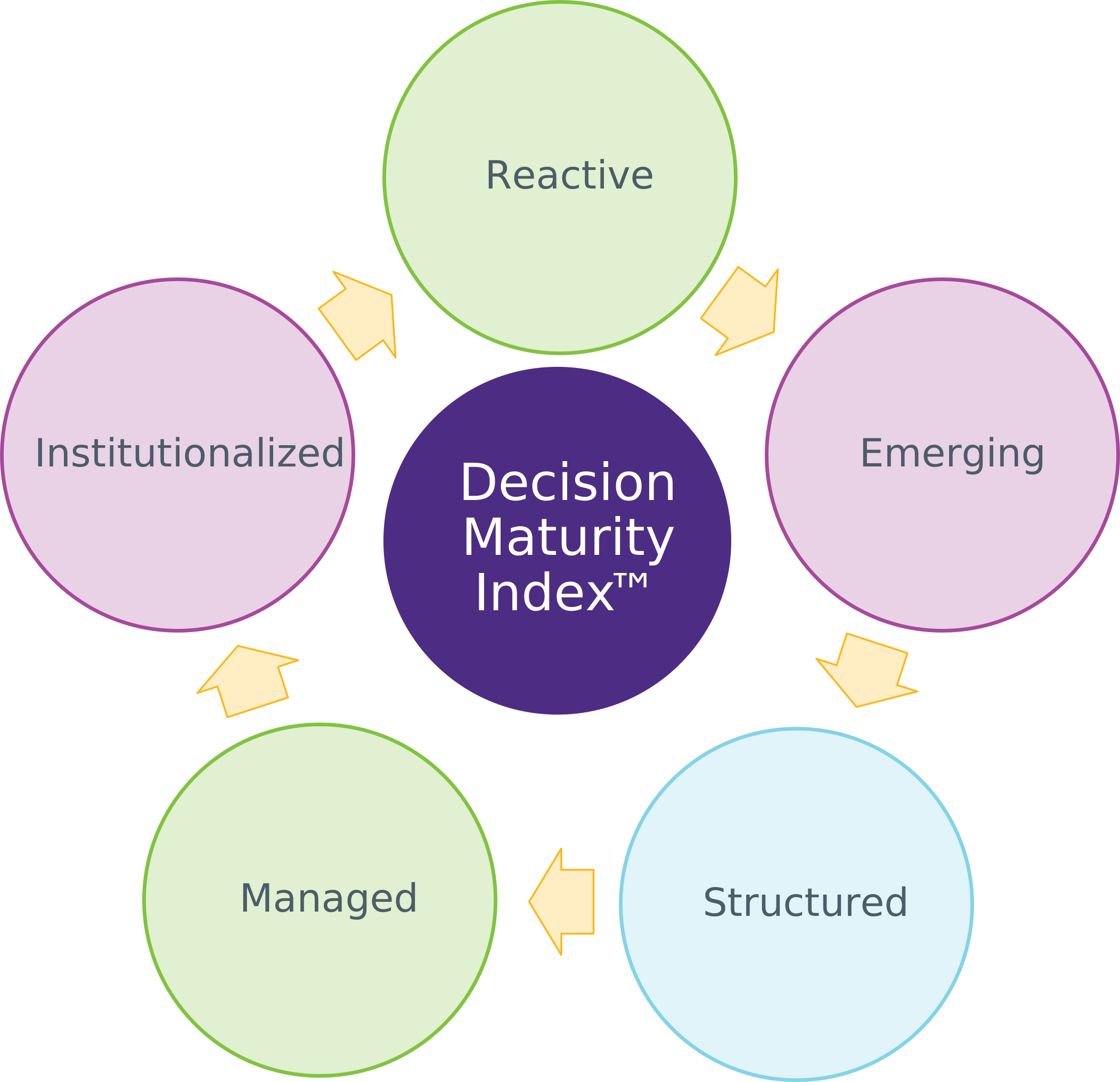
The Decision Maturity Index™ (DMI™) is the evaluative layer of the Enterprise Readiness Operating Model™. It assesses how consistently and effectively decisions move through the organization.
It does not measure personality.
It measures operating discipline.
The central question:
How mature is your decision architecture?
WHY DECISION MATURITY MATTERS
Enterprise value depends on decision integrity.
Buyers and sophisticated stakeholders evaluate:
- Clarity of authority
- Consistency of documentation
- Execution reliability
- Review discipline
- Leadership transferability
An enterprise with weak decision maturity may still generate revenue.
But it will carry:
- Elevated risk
- Friction in diligence
- Concentrated authority
- Reduced valuation confidence
Decision maturity determines whether judgment is institutionalized — or personality-dependent.
The Six Decision Maturity Dimensions
The Decision Maturity Index evaluates six measurable dimensions across every enterprise domain.
1. Decision Clarity
Are decision rights clearly defined and consistently applied?
Evaluates:
- Defined authority thresholds
- Role clarity
- Escalation structure
- Framing precision
Low clarity produces confusion and stalled execution.
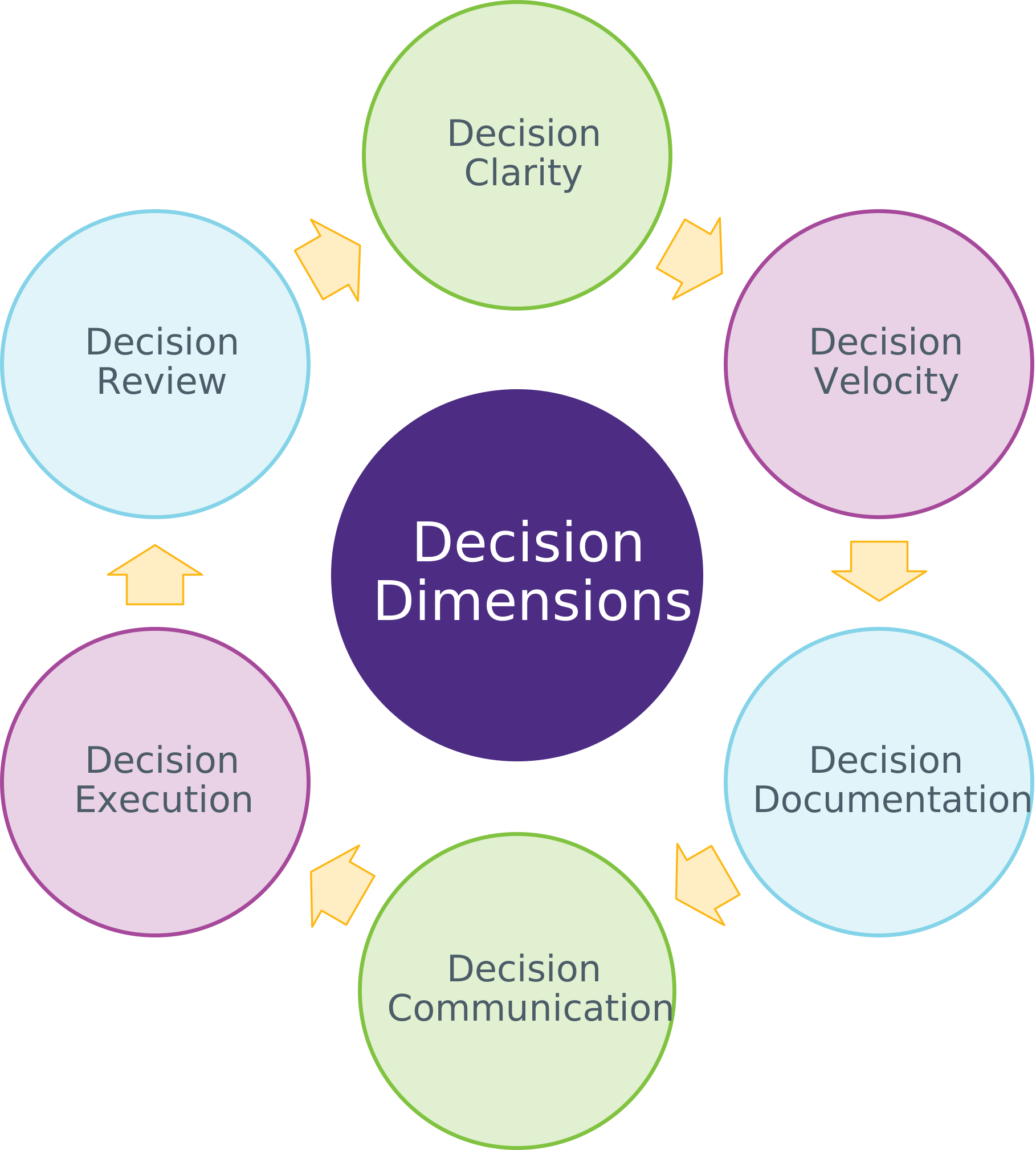
2. Decision Velocity
Are decisions made within an appropriate timeframe?
Evaluates:
- Timeliness
- Escalation responsiveness
- Avoidance patterns
- Delay frequency
Velocity is not speed for its own sake — it is disciplined responsiveness.
3. Decision Documentation
Are decisions formally recorded and traceable?
Evaluates:
- Written approvals
- Preserved rationale
- Change logs
- Institutional memory
Documentation strengthens governance and transaction readiness.
4. Decision Communication
Are decisions effectively aligned across stakeholders?
Evaluates:
- Stakeholder notification
- Clarity of expectations
- Cross-functional alignment
- Misinterpretation frequency
Communication maturity reduces execution friction.
5. Decision Execution
Are decisions implemented and monitored?
Evaluates:
- Completion rates
- Accountability clarity
- Milestone tracking
- Outcome follow-through
Execution closes the loop between intent and impact.
6. Decision Review
Are decisions periodically evaluated and refined?
Evaluates:
- Post-implementation analysis
- Lessons learned integration
- Adjustment discipline
- Governance feedback loops
Review prevents stagnation and silent drift.
How The Index is Applied
Within the Enterprise Readiness Assessment, each of the 10 Enterprise Domains is evaluated across two layers:
- Domain Maturity — structural development
- Decision Maturity — flow integrity
This produces a multidimensional readiness profile.
Not a score for marketing.
A profile for leadership clarity.
The output identifies:
- Concentrated authority risk
- Breakdown patterns
- Friction points
- Transfer vulnerability
- Execution inconsistency
Decision maturity often explains structural weakness more accurately than process design alone.
Maturity Levels
The Decision Maturity Index may be structured across defined tiers:
- Reactive
- Inconsistent
- Structured
- Institutionalized
- Durable
Movement between tiers reflects increasing predictability, documentation integrity, and distributed authority.
Decision Maturity as a Valuation Signal
When decision maturity is high:
- Leadership transitions are smoother
- Due diligence accelerates
- Risk compresses
- Authority distributes
- Culture stabilizes
Buyers do not only evaluate revenue.
They evaluate decision architecture.
Institutionalized judgment increases transfer confidence.
How This Connects to Exit Readiness
Exit readiness is often misunderstood as transaction preparation.
It is not.
It is the development of an enterprise capable of functioning without founder dependence.
Decision maturity is the clearest indicator of that independence.
When decision flow is mature:
- The organization operates predictably
- Authority is distributed
- Execution is consistent
- Governance survives transition
That is enterprise durability
Measure the Integrity of Your Decision Architecture
The Corvata Enterprise Readiness Assessment™ applies the Decision Maturity Index™
across all Enterprise Domains to produce a clear readiness profile.